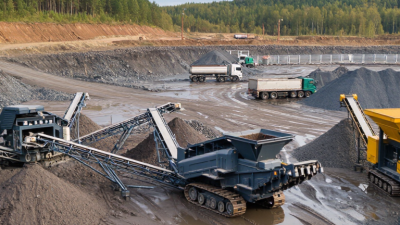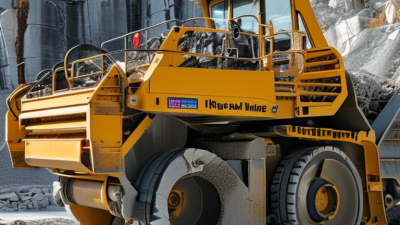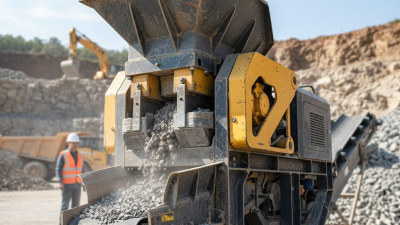
A Portable Stone Crusher is a mobile machine designed to reduce rocks into smaller, usable materials. Unlike a fixed crushing plant, it can move between quarries, construction sites, and road projects. This flexibility saves transport time and may reduce material-handling costs. However, mobility does not mean simple operation. Site conditions still matter.
In practical use, an excavator or loader feeds raw stone into the crusher’s hopper. A vibrating feeder controls the material flow. Inside the machine, a jaw, cone, or impact chamber applies mechanical force. The crushed material then passes through screens, which separate particles by size. Oversized pieces may return for another crushing cycle. The final product can support road bases, drainage layers, concrete production, or landscaping work.
The process looks straightforward. It is not always predictable. Rock hardness, moisture, feed size, and machine settings affect performance. Experienced operators check these factors before production begins. They also inspect belts, liners, screens, and hydraulic components regularly. Manufacturer guidance remains essential, especially when selecting a crusher for abrasive stone. In my view, the best results come from matching equipment capacity with the site’s real demands, not from choosing the largest machine available. Noise, dust, ground stability, and safe working distances also require careful planning. A reliable Portable Stone Crusher should improve workflow while maintaining consistent output and responsible site control. Mistakes can happen. Continuous monitoring helps identify them early.
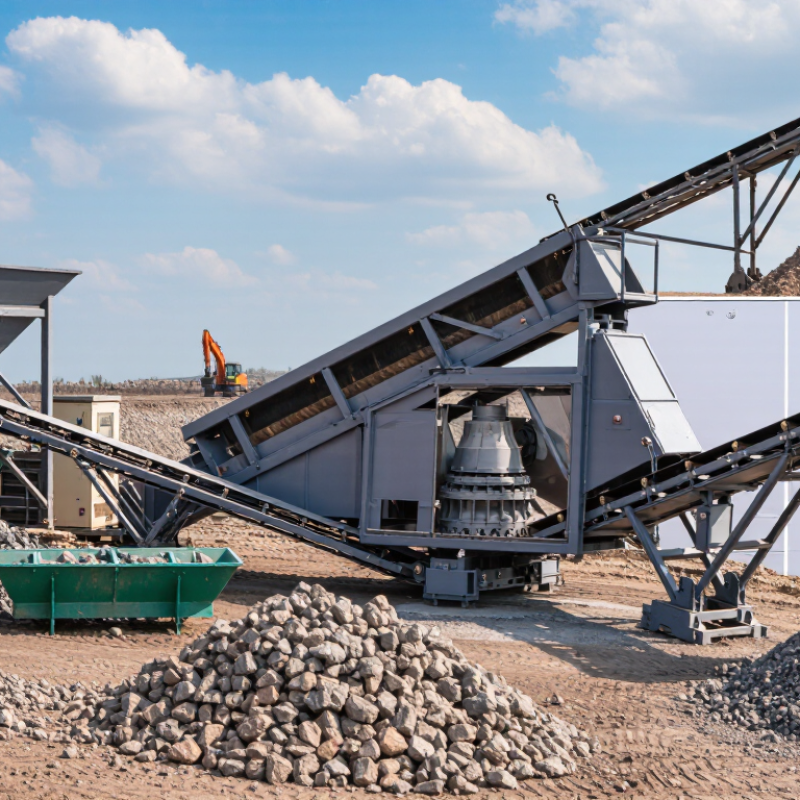
A portable stone crusher is a track- or wheel-mounted machine that reduces rock into usable aggregate near the jobsite. Its purpose is practical: less hauling, faster relocation, and controlled particle sizes for roads, drainage, or concrete. The USGS Mineral Commodity Summaries 2024 reports about 1.5 billion metric tons of crushed stone produced in the United States during 2023. That scale shows why efficient processing matters.
The main components include a feed hopper, vibrating feeder, crushing chamber, discharge conveyor, engine, chassis, and control system. Jaw crushers handle primary reduction, while cone or impact units refine the material. Screens may separate different sizes before stockpiling. In operation, an excavator loads rock into the hopper. The feeder meters the flow. Crushing force breaks the rock, and conveyors move the product outward.
Dust suppression and guards are essential, not optional. The World Health Organization identifies respirable crystalline silica as a serious occupational hazard, so enclosed controls and water sprays deserve careful attention. Fuel use, wear parts, and uneven feed can reduce output. A stated capacity is not a promise. Real production changes with rock hardness, moisture, operator skill, and product size. Field measurements are still necessary.
A portable stone crusher combines a tracked or wheeled chassis, hopper, feeder, crusher chamber, discharge conveyor, and power system. Material is fed into the chamber, reduced by compression or impact, and discharged through a selected screen or opening. The chart shows standard aggregate sieve openings commonly used to describe crushed-stone product sizes; these are reference sizes rather than specifications for any particular machine.
A portable stone crusher is a mobile machine that reduces large rocks into usable aggregate. It usually combines a hopper, vibrating feeder, crushing chamber, conveyor, and supporting frame. Material enters through the hopper, then moves steadily toward the crusher. The process is simple in theory, but feeding is where many operations lose efficiency.
Some heavy-duty portable crushers can accept rocks measuring about 1,200 mm across. This figure is a maximum design limit, not a target feeding size. Real quarry material often arrives with uneven shapes, wet clay, or hidden steel contamination. A vibrating feeder helps separate fine soil and controls the flow before crushing. A grizzly section may remove smaller particles early, reducing unnecessary pressure inside the chamber. Operators should measure the largest rock dimension carefully. One long, flat stone can behave differently from a compact block of the same weight. Oversized pieces may need controlled secondary breaking before entering the hopper.
Tips: Keep the feed centered and continuous. Avoid dumping a full loader bucket at once. Inspect the hopper, feeder bars, and crusher opening before each shift. Leave room for mistakes; field conditions are rarely perfect. Adjust feed speed when moisture, hardness, or rock shape changes. A slower feed may protect the machine and produce steadier output.
A portable stone crusher is a mobile processing unit for reducing blasted rock near the extraction site. Its primary crusher receives large feed through a vibrating feeder. A jaw, gyratory, or impact chamber then applies compression or impact force. The result is commonly about 50–300 mm, depending on the machine and material.
This size range supports secondary crushing and screening. It also reduces hauling volume before further processing. The U.S. Geological Survey reported approximately 1.5 billion metric tons of crushed stone produced in the United States during 2023. That scale shows why controlled primary reduction matters. Hard granite may require a tighter setting and slower feed. Softer limestone can pass faster, but excessive fines may increase. The target is useful, not universal. Real sites often adjust it after checking gradation, moisture, and wear.
Tips: Measure the feed size before selecting equipment. Keep oversized rocks away from the feeder opening. Check the crusher’s closed-side setting during each shift. A dusty discharge may indicate poor suppression or excessive fines. Operators should record product samples, power draw, and blockage events. These simple records support safer adjustments and more reliable output. However, field conditions can defeat a perfect specification. Loose wiring, wet clay, or uneven loading may change performance quickly.
| Data Dimension | Typical Information | How It Relates to Primary Crushing |
|---|---|---|
| Equipment Definition | A mobile crushing unit that combines a feeder, primary crusher, discharge conveyor, chassis, and control system. | It performs the first size-reduction stage close to the excavation or construction site. |
| Primary Crushing Output | Approximately 50–300 mm, depending on the crusher type, feed material, and discharge setting. | The product is generally suitable for secondary crushing, screening, road base, or selected fill applications. |
| Common Crusher Types | Jaw crushers are widely used for hard, abrasive rock; impact crushers are used where shaping and reduction of softer or less abrasive materials are required. | The selected crushing mechanism affects the final particle shape, reduction ratio, wear rate, and operating cost. |
| Typical Maximum Feed Size | Roughly 400–1,200 mm for many portable primary jaw-crushing configurations; the actual limit is model-specific. | The feed opening must be large enough to accept blasted rock or demolition concrete without excessive pre-sizing. |
| Typical Capacity | Approximately 50–600 metric tonnes per hour for common portable primary units. | Capacity varies with feed gradation, rock hardness, moisture, crusher setting, and operator control. |
| Material Suitability | Hard rock, limestone, granite, basalt, recycled concrete, demolition debris, and other bulk mineral materials. | Material abrasiveness and compressive strength influence crusher selection and replacement-part consumption. |
| Feeding Process | A vibrating or grizzly feeder regulates material flow and can remove fine particles before crushing. | Controlled feeding improves throughput and reduces blockages caused by surges or oversized material. |
| Reduction Mechanism | Jaw crushers compress material between a fixed jaw and a moving jaw; impact crushers use high-speed impact forces. | The force breaks large pieces into smaller fragments that can be transferred to the next processing stage. |
| Mobility System | Tracked units move under their own power; wheeled units are commonly moved between sites with a suitable transport vehicle. | Mobility reduces the need to haul raw stone long distances before primary crushing. |
| Power Range | Approximately 100–500 kW for many portable primary crushing plants, depending on configuration and capacity. | Power demand increases with feed size, material strength, production rate, and conveyor or screening equipment. |
| Discharge Conveyor | Transfers crushed material to a stockpile, screening plant, secondary crusher, or haulage system. | A conveyor allows continuous material flow and helps maintain a safe separation between loading and crushing areas. |
| Key Operating Controls | Crusher gap, feeder speed, feed rate, material distribution, and conveyor speed. | Correct adjustment helps achieve the target 50–300 mm product range while limiting overload and uneven wear. |
| Main Advantages | Reduced material transport, fast site relocation, flexible installation, and suitability for temporary or changing projects. | The plant can be positioned near the source material, which may reduce hauling distance and handling steps. |
| Common Applications | Quarrying, road construction, mining support, demolition recycling, site preparation, and aggregate production. | Primary crushing prepares oversize material for further processing or direct use in coarse construction applications. |
| Important Limitations | Very wet, sticky, or clay-rich feed may reduce performance; oversized metal and uncrushable objects can cause blockages or damage. | Pre-screening, material inspection, magnetic separation, and appropriate site planning may be necessary for reliable operation. |
A portable stone crusher combines feeding, crushing, screening, and material transfer on one movable system. A vibrating feeder delivers rock into the crushing chamber at a controlled rate. The crusher reduces oversized stone into smaller pieces. A screen then separates the output by size. Typical production ranges from about 20 to 100 t/h, depending on rock hardness, feed size, moisture, and screen configuration.
Oversized particles do not become waste. A return conveyor sends them back into the crusher for another pass. This recirculation improves particle consistency and helps produce usable aggregate sizes. On a working site, operators may see dust near transfer points and slight changes in output during hard rock processing. These details matter. Capacity figures are estimates, not guarantees. Actual results require testing with the intended material.
Keep the feed steady. Avoid loading wet clay with clean stone. Check screen tension and inspect conveyor belts each shift. A blocked screen can quickly reduce production. Measure the final material, not only the crusher’s hourly output. A simple sample test can reveal excessive fines or uneven sizing. Operators should record moisture, feed size, and production rate. Small records support better adjustments. The process is practical, but it is not perfectly predictable.
Mobility, Power, and Safety in Diesel-Electric Crushing Systems
A portable stone crusher combines a feeder, jaw or impact chamber, conveyors, and a tracked or wheeled frame. It moves between quarry faces, road projects, and recycling areas with limited site preparation. The U.S. Geological Survey estimated 1.9 billion metric tons of crushed stone production in the United States in 2023. That scale explains the demand for flexible crushing equipment. Less hauling can reduce idle time, but transport planning still matters.
Diesel-electric systems use a diesel engine to generate electricity for motors, conveyors, and hydraulic functions. Electric drives provide steady torque and precise control during uneven feeding. They can also simplify power distribution around the machine. Diesel remains useful where grid access is poor. Fuel use varies with rock hardness, moisture, feed size, and operator habits. No setting works everywhere.
Safety begins before the first stone enters. Guards should cover nip points, emergency stops need clear access, and lockout procedures must be practiced. Dust suppression and enclosed transfer points help protect visibility and breathing conditions. The Mine Safety and Health Administration recorded 40 U.S. mining fatalities in 2023, showing why production speed cannot replace control measures. Noise travels. A practical inspection checks belts, cables, fuel lines, and hydraulic leaks daily. I would not call a portable crusher maintenance-free; rushed repositioning remains a serious weakness.