Leave Your Message

Top Small Stone Crusher Types for Global Buyers

Choosing the right Small Stone Crusher begins with the material, not the machine’s appearance. Hard granite, soft limestone, recycled concrete, and river gravel behave differently under pressure. A compact jaw crusher often suits primary crushing and produces reliable results with tough rock. Impact crushers can create more cubical aggregates, especially when the feed is moderately abrasive. Hammer crushers may offer simple operation, but their wear parts can require closer attention.

Global buyers also need to examine output size, hourly capacity, mobility, power supply, and maintenance access. A machine producing 20 tonnes per hour may appear suitable, yet its performance can change with moisture, feed grading, and operator experience. Ask for realistic test data, not only catalogue figures. Request information about motor efficiency, replacement parts, guarding, noise, dust control, and emergency stops. These details influence ownership costs and workplace safety.

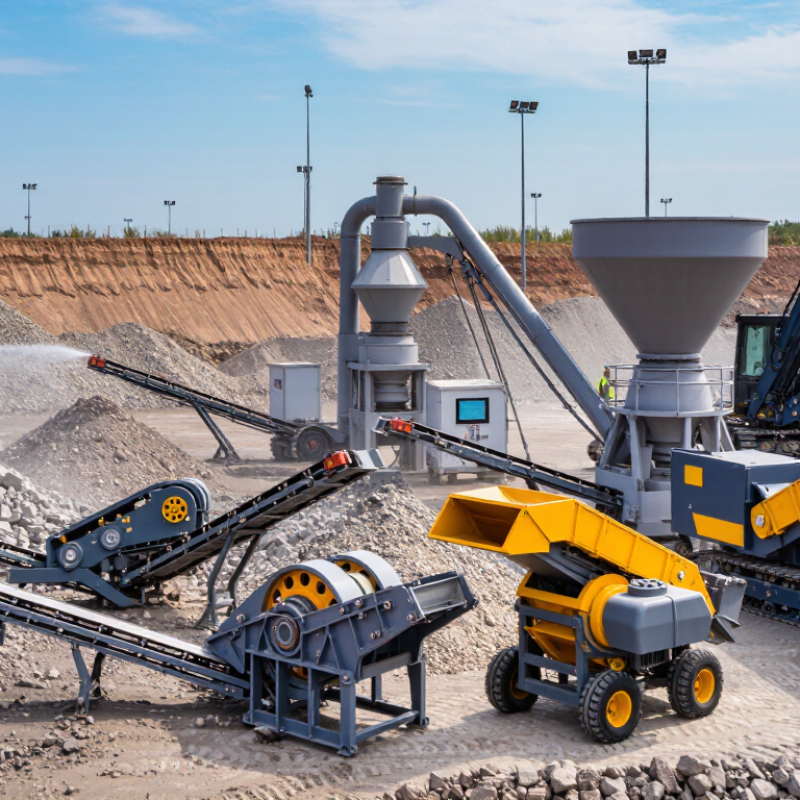
Portable models can reduce transport effort on changing job sites. Stationary units may provide stronger foundations and steadier production. Cone crushers can help with secondary reduction, although they may be excessive for small, low-volume projects. No crusher fits every market. Local service availability and compliance requirements should guide the final decision.

The cheapest option is rarely the simplest choice. Poor access to spare parts can stop production for days. Even experienced buyers sometimes underestimate installation space and electrical requirements. A careful comparison of crusher type, feed material, expected output, and long-term support creates a more dependable purchase. This guide examines the leading small crusher types and the practical conditions that make each one suitable.
Top Small Stone Crusher Types for Global Buyers

What Defines a Small Stone Crusher for Global Buyers

A small stone crusher is defined by practical capacity, not appearance alone. Its compact frame should fit limited sites, narrow access roads, or temporary work areas. Global buyers should check feed opening, hourly output, discharge size, and motor requirements. A machine processing 10–30 tonnes per hour may suit small contractors, but rock hardness changes results. Jaw crushers handle primary breaking well. Impact crushers can produce more shaped aggregates. Small cone crushers may suit harder stone, although maintenance demands can increase.

From field observations, clearance around the machine matters as much as its listed dimensions. Workers need safe access for inspections, belt adjustment, and cleaning. Dust control, noise limits, spare-part availability, and local electrical standards also affect real ownership costs. A lower purchase price can become expensive when transport or replacement parts are difficult. I have seen buyers focus too heavily on capacity. That choice was not always practical.

Tips: Measure the largest stone before selecting a feed opening. Ask for verified capacity data using similar rock. Confirm output sizes with a sample test. Check whether the machine supports your power supply. Review guarding, emergency stops, lubrication points, and operator training. Portable units can save setup time, but their frames may require careful leveling. Do not ignore weather protection. Small details matter.

Top Small Stone Crusher Types for Global Buyers - What Defines a Small Stone Crusher for Global Buyers

Crusher Type Typical Small-Scale Capacity Typical Maximum Feed Size Common Product Size Suitable Materials Main Advantages Key Limitations Typical Power Range Common Applications
Small Jaw Crusher 1–80 t/h 100–400 mm 25–100 mm, depending on discharge setting Granite, basalt, limestone, concrete, brick, and other hard feedstock Simple structure, strong primary crushing performance, and relatively easy maintenance Usually produces a less cubical product and may require secondary crushing 15–110 kW Quarrying, construction and demolition recycling, aggregate preparation, and small mining operations
Small Impact Crusher 10–100 t/h 100–300 mm 10–60 mm Limestone, softer rock, recycled concrete, asphalt, and moderately abrasive materials Good particle shape, high reduction ratio, and effective production of manufactured sand and aggregates Blow bars and impact surfaces wear faster with highly abrasive rock 30–160 kW Road base, concrete aggregate, asphalt recycling, and limestone processing
Small Cone Crusher 10–120 t/h 50–180 mm, depending on model and chamber 5–50 mm Hard and abrasive rock such as granite, basalt, and high-strength aggregates Consistent product grading, good cubicity, and efficient secondary or tertiary crushing Requires controlled feeding and is generally more complex than a jaw crusher 75–200 kW High-quality aggregate, railway ballast, manufactured sand, and hard-rock processing
Small Hammer Crusher 5–60 t/h 50–250 mm 3–30 mm Limestone, gypsum, coal, shale, brick, and other relatively soft to medium-hard materials Compact design, high reduction ratio, and fine output in a single crushing stage High wear rates and lower suitability for very hard or highly abrasive stone 11–90 kW Small limestone plants, brick recycling, gypsum processing, and coal preparation
Small Roller Crusher 5–50 t/h 30–150 mm 3–25 mm Coal, limestone, clay, salt, shale, and other low- to medium-hard materials Relatively low fines generation, adjustable product size, and controlled crushing action Not normally preferred for very hard, large, or highly abrasive rock 15–110 kW Industrial minerals, coal handling, chemical raw materials, and small aggregate plants
Portable Small Crusher Plant 20–150 t/h 100–400 mm, based on the installed crusher 10–100 mm, based on the crushing stage Natural stone, concrete, asphalt, and mixed demolition materials Easy relocation, reduced site preparation, and flexible use across multiple projects Higher purchase and transport requirements than a standalone crusher; output depends on configuration 40–250 kW total installed power Mobile quarrying, road construction, demolition recycling, and temporary aggregate production
Note: Capacity, feed size, output size, and power are typical industry ranges for small-scale equipment. Actual performance depends on material hardness, moisture, feed gradation, crusher setting, chamber design, screening arrangement, and operating conditions.

How Jaw, Cone, Impact, and Hammer Crushers Differ

Top Small Stone Crusher Types for Global Buyers

How Jaw, Cone, Impact, and Hammer Crushers Differ

Small stone crushers perform differently because each uses a distinct crushing method. Jaw crushers compress rock between a fixed plate and a moving plate. They handle hard, rough feed and produce a practical primary product. Cone crushers also use compression, but their rotating mantle creates a more uniform, smaller output. They work well after jaw crushing, especially when consistent aggregate shape matters.

Impact crushers break stone through rapid blows against impact surfaces. They can produce cubical particles and suit softer or moderately hard materials. However, abrasive rock may wear internal parts quickly. Hammer crushers use swinging hammers to fracture material against a grate. They are useful for softer stone, limestone, and controlled reduction. Their simple structure can help maintenance, but oversized or very hard feed may cause frequent stoppages. No crusher is perfect.

Tips

Check the stone before choosing equipment. A dusty limestone sample behaves very differently from wet, abrasive granite. Measure the largest feed size, target output, moisture, and expected daily volume. Leave room for realistic wear costs. I have seen buyers focus only on purchase price, then struggle with screens, liners, and blocked feed openings. A small test run is often wiser than relying on a catalogue rating. Also, inspect access for cleaning and adjustment; this detail is easily missed.

Which Stone Crusher Type Fits Each Material and Output

Top Small Stone Crusher Types for Global Buyers

Choosing a small stone crusher depends on the material and required output. Material hardness, moisture, and target size matter more than advertised capacity.

For granite, basalt, and recycled concrete with steel removed, a jaw crusher usually handles primary reduction reliably. It produces a coarser, less uniform product. A small cone crusher fits secondary crushing when consistent 5–25 mm aggregate is required. It performs best with controlled feed and stable settings.

For limestone, brick, and other softer materials, an impact crusher can create better-shaped particles. Yet excessive fines may appear when the feed is damp or fragile. Hammer crushers suit softer, low-abrasion stone and simple, high-ratio reduction. Output goals should guide the choice. A 20-ton-per-hour gravel job needs different screening than a 5-ton-per-hour decorative aggregate line.

Tips: Test a representative sample before purchase. Measure feed size, moisture, abrasiveness, and actual output. Ask for a closed-loop trial with the intended screen. Inspect wear parts after several hours, not only at startup. One overlooked detail is power stability. It can quietly reduce output. My judgment may change after testing, because local stone often behaves differently than its label suggests. Leave room for adjustment.

Key Buying Factors: Capacity, Power, Mobility, and Maintenance

Top Small Stone Crusher Types for Global Buyers

Capacity should match your feed size, rock hardness, and daily production target. The USGS Mineral Commodity Summaries 2024 reported about 1.5 billion metric tons of crushed stone production in the United States during 2023. That scale shows why accurate output planning matters. A crusher rated at 100 tonnes per hour may deliver less with wet feed, oversized rocks, or frequent stops. Ask for tested throughput, not only the catalogue figure. Jaw crushers suit primary reduction, while cone and impact crushers support finer applications. Power demand rises with compressive strength and reduction ratio. Check motor efficiency, starting current, and local electrical conditions before buying.

Tips: Record feed size, target product size, and operating hours. Request a sample test when possible. A small spreadsheet can expose an oversized machine.

Mobility affects transport cost and site flexibility. Track-mounted units move across uneven ground, while wheeled units often need prepared access and towing arrangements. Confirm total weight, transport width, setup time, and safety clearances. Maintenance deserves equal attention. Inspect liner replacement time, bearing access, belt alignment, lubrication points, and dust-control equipment. ISO 21873-1 provides terminology for mobile crushers, helping buyers compare specifications consistently. In practice, the cheapest offer can become expensive after one neglected bearing failure. I would also question unrealistically low maintenance estimates. Real sites are dusty, rushed, and imperfect. Reliable service documentation and locally available wear parts may matter more than extra power.

How to Compare Suppliers, Safety Features, and Total Costs

Top Small Stone Crusher Types for Global Buyers

How to Compare Suppliers, Safety Features, and Total Costs

Small jaw crushers suit hard rock and steady primary crushing, while impact crushers produce more cubical aggregate. Hammer crushers can handle softer, brittle materials, but their wear rate may rise quickly. The right type depends on feed size, output targets, moisture, and available power. Ask each supplier for a test report using stone similar to yours. A photograph is not enough. Request motor details, capacity ranges, product size, and expected wear-part life.

Compare suppliers beyond the quoted machine price. Check manufacturing experience, inspection records, technical drawings, and customer references from similar climates. A reliable supplier should explain installation, operator training, spare-part availability, and warranty limits clearly. Slow replies may become expensive later. Request a live video inspection or an independent factory check. No checklist catches everything.

Safety features deserve direct inspection. Look for enclosed drive components, a guarded feed opening, emergency-stop controls, overload protection, stable access platforms, and clear maintenance points. Dust suppression and noise controls may also matter near populated areas. Confirm that manuals match the machine supplied and support local workplace requirements. Calculate total cost using freight, taxes, foundation work, wiring, fuel or electricity, labor, wear parts, lubrication, and downtime. A cheap crusher can become costly after one damaged bearing. Still, estimates are imperfect; actual rock hardness and operator habits can change results. Use a conservative budget, not an optimistic one.

Top Small Stone Crusher Types for Global Buyers

Comparison of typical maximum throughput and installed motor power for common small crusher configurations. Actual performance depends on feed size, rock hardness, moisture, discharge setting, and plant layout.

Jaw crushers are commonly selected for primary crushing and hard rock. Impact crushers can provide a more cubical product, while hammer crushers suit softer, less abrasive materials. Compact mobile jaw units improve site flexibility but generally require higher investment and more complex maintenance. Buyers should compare safety guarding, emergency stops, overload protection, spare-parts availability, energy use, and total ownership cost—not purchase price alone.