Leave Your Message
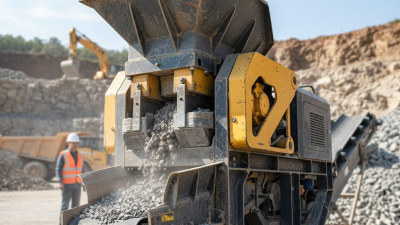
Choosing a reliable Small Stone Crusher manufacturer in China requires more than comparing prices and machine photographs. Buyers should examine production experience, engineering capability, export service, and after-sales support. A crusher may look impressive in a catalog, yet perform poorly with wet limestone, oversized feed, or abrasive granite. Real suitability depends on the complete working condition.
This guide reviews leading Chinese manufacturers through practical criteria. These include jaw and impact crusher design, feed opening, discharge adjustment, capacity stability, and wear-part availability. Factory audits can reveal important details, such as welding quality, assembly accuracy, testing procedures, and spare-parts storage. A short video is helpful. It is not enough.
Experienced suppliers usually provide technical drawings, foundation guidance, operating manuals, and commissioning support. They should also explain motor selection, dust-control options, noise limits, and maintenance intervals. Reliable communication matters when a replacement plate is needed urgently. However, no manufacturer is perfect. Product claims may differ from field results, and smaller suppliers may offer limited documentation. Buyers should request references, inspect similar installations, and confirm performance under comparable materials.
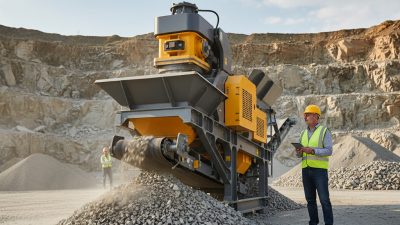
The manufacturers discussed here serve construction, quarrying, recycling, and small aggregate projects. Their strengths differ. One may offer compact equipment for a narrow site, while another provides stronger customization or broader international support. Careful comparison helps match machine design with production goals, budget, and local conditions. The best decision is rarely the cheapest one. It is the most transparent and technically suitable choice.
Top Small Stone Crusher Manufacturers in China
What makes a small stone crusher manufacturer stand out in China is not simply a low quotation. Practical engineering matters more. A reliable manufacturer asks about feed size, rock hardness, output targets, and working conditions before suggesting a machine. This prevents buyers from receiving equipment that looks suitable but performs poorly on site.
Strong manufacturers test key components before shipment. They check crushing plates, bearings, motor capacity, weld quality, and discharge settings. Clear technical drawings also help operators understand maintenance points. In my experience, small details matter. A loose fastener can stop a full day’s production.
After-sales support reveals a manufacturer’s real capability. Responsive engineers should provide installation guidance, spare-parts information, and troubleshooting instructions. Useful manuals include photographs, measurements, and safety warnings. Remote support is valuable, but local service partners can reduce downtime further. Some manufacturers still explain specifications too generally. That deserves careful questioning.
A dependable supplier should provide inspection records and realistic performance data. Ask how output changes with different materials and moisture levels. Ask about noise, dust control, and power consumption. These answers show practical knowledge, not sales language. Factory visits can also reveal workshop organization, testing procedures, and whether finished machines are properly protected before delivery. No supplier gets every decision right. Transparent communication makes those weaknesses easier to manage.
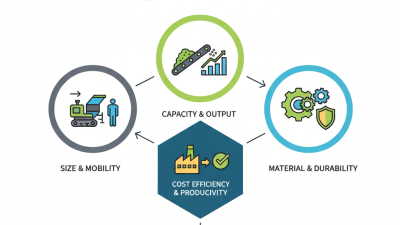
| Evaluation Dimension | Typical Small-Crusher Benchmark | What Makes a Manufacturer Stand Out | Buyer Verification Points |
|---|---|---|---|
| Processing Capacity | Approximately 1–100 tonnes per hour, depending on crusher type, feed material, discharge setting, and moisture content. | Provides tested capacity figures for specific materials rather than using a single capacity claim for every application. | Request a model-specific capacity calculation, material specification, and test results under the proposed operating conditions. |
| Feed Opening and Maximum Feed Size | Compact jaw crushers commonly use feed openings of roughly 200–600 mm; the permissible feed size is normally lower than the opening width. | Matches the feed opening, crushing chamber, and hopper design to the customer’s actual rock size instead of recommending an undersized machine. | Compare the technical drawing, maximum lump size, recommended feed size, and loading equipment requirements. |
| Motor Power and Energy Use | Small jaw and impact crushers often use motors in the approximate range of 7.5–160 kW, depending on model and application. | Supplies a complete electrical specification, including rated power, starting current, voltage, frequency, protection class, and control-panel configuration. | Confirm motor documentation, local power compatibility, generator requirements, and estimated energy consumption per tonne. |
| Discharge-Size Adjustment | Jaw crushers typically use a mechanical or hydraulic closed-side-setting adjustment; the final product size depends on the selected setting and feed characteristics. | Offers repeatable adjustment, clear setting instructions, and practical access for inspection and maintenance. | Review the adjustment range, product-size curve, calibration method, and safety procedure before purchase. |
| Wear-Part Service Life | Jaw plates, impact blow bars, cheek plates, and liners are consumable components. Service life varies significantly with rock hardness, abrasiveness, feed size, and operating practice. | Uses documented material grades and provides alternative wear-part options for abrasive materials such as granite, basalt, and recycled concrete. | Ask for wear-part drawings, material certificates where applicable, replacement intervals from comparable applications, and spare-part pricing. |
| Machine Structure and Mobility | Small units may be supplied as stationary, skid-mounted, trailer-mounted, or track-mounted equipment, depending on the application. | Optimizes frame strength, transport dimensions, lifting points, access platforms, and setup time for the intended site conditions. | Check shipping dimensions, operating weight, center of gravity, foundation requirements, tire or track specifications, and lifting instructions. |
| Dust and Noise Management | Crushing operations can generate dust and noise; actual levels depend on material, moisture, enclosure, feed arrangement, and site layout. | Integrates sealed transfer points, water-spray interfaces, dust covers, noise-reduction measures, and safe access for cleaning. | Request the dust-control layout, recommended water consumption, noise data where available, and compliance requirements for the destination site. |
| Automation and Safety | Basic systems may include emergency stops and overload protection; more advanced systems can include interlocks, sensors, alarms, and remote monitoring. | Provides clearly documented interlocking logic, overload protection, guarded moving parts, lockout points, and an operator-friendly control system. | Review the electrical diagram, risk assessment, safety guards, emergency-stop locations, and commissioning checklist. |
| Quality Control | Core inspections should cover steel fabrication, shaft and bearing alignment, weld quality, machining accuracy, assembly, and no-load testing. | Maintains traceable inspection records and performs documented factory testing before shipment. | Request inspection checklists, dimensional records, photographs or videos of testing, and a final acceptance report. |
| Customization Capability | Common options include different discharge settings, feed hoppers, conveyors, magnetic separators, dust-control connections, and electrical configurations. | Designs the crusher as part of a complete process instead of selling an isolated machine that may not match the feeder, screen, or conveyor. | Provide the manufacturer with material type, feed size, target product size, capacity, site power, and operating environment. |
| Spare Parts Availability | Essential stock normally includes jaw plates or blow bars, bearings, belts, screens, fasteners, lubrication components, and electrical spares. | Supplies a parts manual, part numbers, recommended stock levels, and realistic lead times for both routine and emergency parts. | Compare the initial spare-parts package, warranty exclusions, delivery time, packaging method, and after-sales contact process. |
| Installation and Technical Support | Support may include installation drawings, operating manuals, remote guidance, commissioning assistance, and operator training. | Provides multilingual documentation, structured commissioning, troubleshooting procedures, and training focused on safe and stable production. | Confirm what is included in the quotation, response times, service coverage, training format, and availability of technical personnel. |
| Export and Documentation Capability | International shipments generally require commercial documents, packing lists, technical documentation, shipping information, and destination-specific electrical details. | Has consistent export packaging, accurate shipping data, clear manuals, and experience adapting documentation to different markets. | Check the pro forma invoice, packing list, equipment dimensions, gross weight, spare-parts list, manuals, and agreed inspection documents. |
| Total Cost of Ownership | Purchase price is only one cost. Freight, installation, power consumption, wear parts, downtime, maintenance, and operator training also affect the final cost. | Provides a transparent quotation and explains expected operating costs instead of competing only on the lowest initial price. | Compare delivered cost, estimated cost per tonne, wear-part consumption, service requirements, warranty terms, and expected downtime. |
| Supplier Selection Signals | Reliable selection should be based on application fit, verifiable technical data, quality controls, service capability, and lifecycle cost. | Supports claims with drawings, test records, reference applications, inspection documents, and a clearly defined commercial agreement. | Use a written technical specification and compare suppliers on the same capacity, feed size, product size, power, delivery, and service assumptions. |
Note: Capacity, power, feed-size, and wear-life figures are indicative industry ranges for small crushing equipment. Actual performance must be confirmed for the selected model, material, operating conditions, and site configuration.