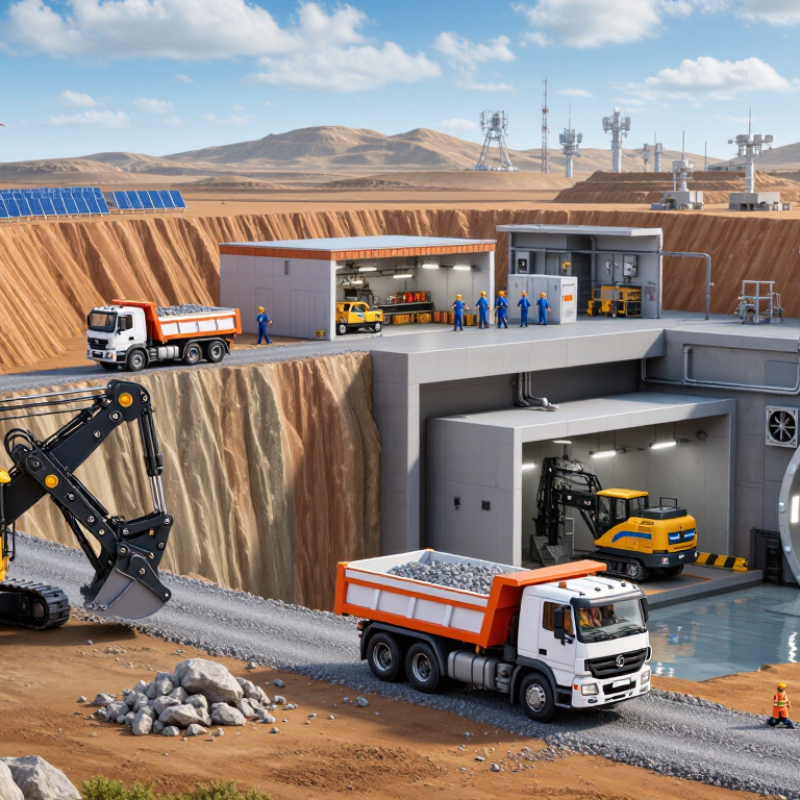
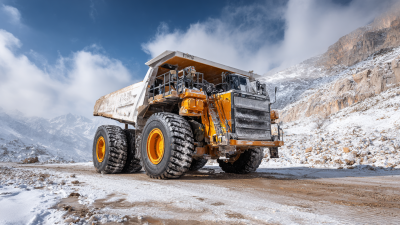
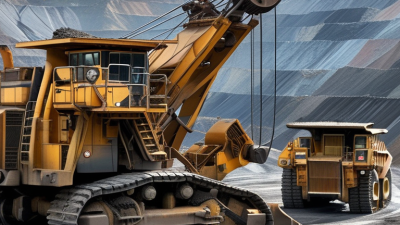
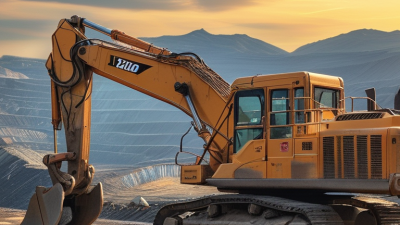
Choosing Mining Machinery in 2026 is no longer about selecting the largest excavator or the fastest crusher. It is about matching equipment to geology, production targets, labor conditions, energy costs, and long-term site plans. A machine that performs well in a dry open-pit mine may struggle in wet underground workings. The details matter.
Helena Hedblom, President and CEO of Epiroc, has said, “The mining industry is going through a major transformation.” Her statement reflects the growing importance of automation, electrification, data systems, and safer operating practices. These technologies can reduce fuel use and improve consistency, but they also require skilled technicians, reliable connectivity, and careful implementation. Not every mine is ready for full autonomy.
This guide examines how to compare Mining Machinery for the 2026 operating environment. It considers capacity, payload, maintenance access, battery or fuel performance, emissions, operator safety, spare-parts availability, and total cost of ownership. A machine’s purchase price is only one part of the decision. Downtime can quietly cost more than the equipment itself.
Field experience should guide the final choice. Inspect the haul roads, measure material hardness, and review actual maintenance records. Speak with operators, not only sales teams. Test the support network before signing a contract. That step is often overlooked.
There is no perfect machine. Sometimes, a smaller unit with stronger local support delivers better results. Sometimes, new technology creates more complexity than value. A reliable decision requires evidence, independent comparisons, and honest reflection on the mine’s real capabilities.
Choosing mining machinery in 2026 starts with the task, not the catalogue. Define whether you need drilling, loading, hauling, crushing, or selective separation. A machine designed for peak output may struggle in narrow headings or irregular benches. Set the target in tonnes per hour, then adjust for shift delays, maintenance, and operator changes. Measure the muck.
Material properties matter just as much. Record hardness, abrasiveness, moisture, density, fragmentation, and clay content before comparing specifications.
The IEA Global Critical Minerals Outlook 2024 projects lithium demand to rise ninefold by 2040 under its Stated Policies Scenario. That growth increases pressure on productivity, but it does not justify buying the largest available machine.
Wet fines can block screens, while abrasive rock can accelerate wear on buckets, liners, and conveyors.
Site conditions often decide the practical choice. Check road width, gradient, ground bearing capacity, altitude, temperature, dust, water availability, and power reliability.
A heavy hauler may lose efficiency on steep, weak roads. A compact loader may work better in confined areas, despite lower rated capacity. MSHA recorded 40 mining fatalities in the United States during 2023, reinforcing the need to assess visibility, access, emergency stopping, and maintenance safely.
I would not treat a vendor’s duty cycle as guaranteed production. Field measurements are better, although they are rarely perfect. Allow room for bad weather, inexperienced operators, and changing geology.
Match Machine Types to Excavation, Crushing, and Processing Needs
Machine selection should begin with the material, not the equipment catalogue. For hard rock excavation, hydraulic excavators need suitable bucket capacity, breakout force, and stable ground access. Softer overburden may favor lighter digging systems with lower fuel demand. The U.S. Geological Survey reported approximately 1.5 billion metric tons of crushed stone production in 2024. That scale shows why small efficiency gains can affect entire operations.
Crushing needs a separate assessment. Primary crushers handle large run-of-mine material, while secondary and tertiary units control final size. Measure feed dimensions, moisture, abrasiveness, and required throughput before choosing a configuration. A 2024 mining equipment report by the International Energy Agency highlights rising mineral demand from clean-energy technologies. More complex ores may therefore require tighter screening and staged processing.
Do not trust capacity figures alone. Actual output falls when haul roads, feed consistency, or maintenance planning are weak. Field assessments should record cycle times, dust conditions, transfer points, and operator visibility. A neat spreadsheet can still be wrong. Processing equipment must also match recovery targets, water availability, and ore variability. Oversizing may waste capital; undersizing can create bottlenecks that remain invisible until production rises. Test samples under realistic conditions, then review the assumptions again.
Choosing mining machinery in 2026 starts with measured site conditions, not catalogue payloads. Capacity should match the material’s density, haul distance, loading method, and required tonnes per hour. The IEA’s Global Critical Minerals Outlook 2024 expects strong demand growth for several minerals, increasing pressure on mine productivity. However, larger equipment can create longer loading queues and higher maintenance exposure.
Compare power use in kilowatt-hours per tonne, not only engine rating. A high-powered machine may move more material, yet consume more fuel during idling, climbing, or partial loads. Deloitte’s Tracking the Trends 2025 highlights energy efficiency and productivity as continuing mining priorities. Record fuel, payload, cycle time, tyre wear, and unplanned stops for at least one operating month. Mobility also matters. Check turning radius, ramp gradients, ground pressure, transport permits, and relocation time between benches. A machine that loses two hours during each move may have impressive laboratory output but weak site performance.
Tips: Build a simple cost-per-tonne model. Include fuel, electricity, labour, tyres, scheduled maintenance, financing, and downtime. Test realistic loads, not ideal ones. PwC’s Mine 2024 reported 2023 revenue of 869 billion dollars for the top 40 mining companies, showing how small efficiency changes can affect major operations. Still, that benchmark is not a site guarantee. Local geology, weather, operator skill, and spare-parts access can overturn the spreadsheet. I would recheck every assumption after the first 90 days.
How to Choose Mining Machinery in 2026?
Safety should be judged at the working face, not only in a showroom. Check guarding, emergency stops, visibility, access ladders, and operator exposure to dust and noise. Ask for documented test results, inspection records, and compliance with applicable local requirements. A useful site trial should measure braking distance, blind spots, and alarm visibility during poor weather.
Automation can reduce exposure to unstable ground, but it is not a substitute for trained supervision. Look for collision avoidance, remote monitoring, fault alerts, and simple control interfaces. Operators should understand what the system is doing when sensors lose accuracy. Keep a manual fallback. It matters.
Maintenance affects production more than many purchase teams expect. Inspect filter access, service points, diagnostic tools, and the time needed to replace common components. Ask whether technical support, training, and replacement parts are realistically available near the site. Review maintenance data from similar operating conditions, not ideal laboratory figures. No checklist is perfect.
Environmental performance requires measurable evidence. Compare fuel or electricity use per operating hour, hydraulic leak protection, noise levels, dust suppression, and water-recycling capacity. Electric equipment may lower local emissions, but battery charging can shift environmental pressure elsewhere. Examine the full energy source and disposal process. Small design choices matter, such as sealed lubrication points and washable intake filters. A machine may appear efficient, yet poor operator training can erase those gains.
| Machinery Type | Typical Application | Safety Features to Evaluate | Automation Readiness | Maintenance Considerations | Environmental Features |
|---|---|---|---|---|---|
|
Underground Battery LHD
Safety: High
|
Loading and hauling broken ore in underground rooms, stopes, and development headings. | Remote operation, collision avoidance, proximity detection, operator visibility systems, automatic braking, fire suppression, and battery isolation controls. | High Suitable for teleoperation and autonomous tramming where underground communications, mapping, and traffic controls are available. |
Battery health monitoring, high-voltage training, planned charging procedures, dust control, and inspection of articulation joints, brakes, tires, and hydraulic systems. | Zero tailpipe emissions at the work face; lower underground ventilation demand than diesel equipment. Environmental performance depends on electricity source and battery recycling arrangements. |
|
Diesel Underground LHD
Safety: Medium
|
Underground loading and hauling where high mobility, rapid refueling, or limited electrical infrastructure is required. | Certified diesel engine, fire suppression, proximity detection, enclosed operator protection, braking redundancy, ventilation monitoring, and exhaust treatment. | Medium Remote tramming and operator-assist functions are available, but diesel exhaust and traffic interaction require strict site controls. |
Frequent attention to engine fluids, filters, exhaust after-treatment, cooling systems, brakes, tires, and hydraulic components. Ventilation and emissions testing are essential. | Produces underground exhaust emissions and heat; lower local emissions can be achieved with cleaner fuels, efficient engines, idle reduction, and well-maintained exhaust-treatment systems. |
|
Electric Rope Shovel
Safety: High
|
High-volume loading of blasted material in large open-pit operations. | Operator cabin protection, hoist and crowd limit controls, ground-fault protection, access interlocks, machine condition monitoring, and emergency-stop systems. | High Supports operator-assist functions, automated digging guidance, payload monitoring, and fleet-management integration. |
Planned inspection of ropes, hoist machinery, gears, electrical drives, structural components, and cables. Condition monitoring can reduce unplanned downtime. | No direct diesel exhaust during operation; high electrical demand. Regenerative drives and optimized dig cycles can reduce energy use per tonne. |
|
Large Hydraulic Excavator
Safety: High
|
Loading overburden, ore, and blasted rock into haul trucks in open-pit mines and quarries. | Cab rollover protection, access control, swing-zone alerts, object detection, load-limiting systems, fire suppression, and stable bench design. | Medium Machine guidance, payload monitoring, operator-assist controls, and remote monitoring are common; full autonomy depends on the mine system. |
Hydraulic oil condition monitoring, hose inspections, undercarriage maintenance, filtration, cooling-system service, and structural inspections are key to availability. | Diesel models generate exhaust and noise. Electric or cable-fed configurations can reduce local emissions where suitable grid capacity is available. |
|
Autonomous Haul Truck
Safety: High
|
Repetitive hauling between loading areas, crushers, stockpiles, and waste dumps in large surface mines. | Redundant braking and steering, geofenced routes, obstacle detection, remote intervention, emergency stop zones, traffic management, and controlled interaction with personnel. | Very High Designed for autonomous haulage when supported by reliable positioning, communications, dispatch software, and clearly separated operating zones. |
Requires disciplined tire management, brake and suspension inspections, sensor cleaning, software maintenance, communications testing, and data-driven component replacement. | Route optimization, reduced idling, consistent speed control, and trolley-assist or battery-electric options can lower fuel consumption and greenhouse-gas emissions. |
|
Conventional Haul Truck
Safety: Medium
|
Flexible surface hauling across variable pit layouts, short-term work areas, and mixed production routes. | Operator visibility aids, rear and side detection, fatigue monitoring, retarder systems, emergency braking, fire suppression, and well-maintained haul roads. | Medium Fleet dispatch, payload measurement, driver-assistance systems, and remote diagnostics can improve control without full autonomy. |
Tire condition, brakes, suspension, steering, engine systems, transmission, cooling, and frame inspections strongly influence safety and operating cost. | Fuel consumption is affected by payload, grade, rolling resistance, idling, and road condition. Trolley-assist, hybrid, or battery solutions may reduce fuel use where infrastructure permits. |
|
In-Pit Crusher and Conveyor System
Safety: High
|
Continuous or semi-continuous transport of crushed material from the pit to processing or stockpile areas. | Pull-cord emergency stops, guarding, interlocks, belt-slip detection, blocked-chute protection, dust suppression, access control, and conveyor monitoring. | High Centralized control, automatic start-up sequences, belt monitoring, crusher control, and predictive maintenance are well suited to fixed operating zones. |
Requires inspection of belts, idlers, pulleys, bearings, liners, transfer points, electrical drives, and dust-control equipment. Predictive monitoring can identify failures early. | Can reduce truck movements, diesel consumption, road dust, and traffic exposure. Electricity demand, noise, dust at transfer points, and landform changes must still be managed. |
|
Underground Drill Rig
Safety: High
|
Face drilling, production drilling, long-hole drilling, and ground-support preparation in underground mines. | Remote drilling, automated boom positioning, drill-plan enforcement, rock-fall exclusion zones, rod-handling protection, water dust suppression, and emergency isolation. | High Digital drill plans, automated boom control, remote operation, and drilling-data capture can improve repeatability and reduce exposure at the face. |
Drill-steel and consumable management, hydraulic and electrical inspections, compressor service, water-system maintenance, boom alignment, and rock-drill condition monitoring are important. | Electric drilling reduces local exhaust emissions; water injection limits respirable dust. Noise, water use, hydraulic-fluid leakage, and energy consumption should be monitored. |
|
Mobile Service and Support Unit
Safety: Medium
|
Fueling, lubrication, tire service, electrical support, parts delivery, and field maintenance in remote production areas. | Isolation and lockout systems, spill containment, lifting protection, hose management, fire suppression, remote-area communications, and safe access platforms. | Medium Digital work orders, remote diagnostics, fluid monitoring, inventory tracking, and maintenance scheduling improve service control. |
Standardized inspection checklists, condition-based lubrication, spill-response equipment, parts traceability, and safe lifting procedures reduce downtime and risk. | Electric service vehicles, closed-loop lubrication systems, fluid recycling, biodegradable hydraulic fluids, and spill prevention can reduce environmental impact. |

Evaluation note: Ratings are general procurement guidance rather than universal equipment specifications. Actual safety, automation, maintenance, energy, and environmental performance depends on machine configuration, mine layout, operating conditions, workforce competence, infrastructure, local regulations, and the quality of the site management system.
Supplier verification should begin before any technical comparison. Request audited financial statements, ownership records, machine serial-number histories, and three recent customer references. A factory visit can reveal more than a polished presentation. Check welding quality, parts storage, calibration records, and maintenance logs. The IEA’s Global Critical Minerals Outlook 2024 projects clean-energy copper demand could rise from 6.3 million tonnes in 2023 to about 10.9 million tonnes by 2035 under stated policies. Higher production pressure makes dependable equipment increasingly important.
Compliance must be documented, not promised. Match each machine with applicable electrical, emissions, noise, guarding, and occupational-safety requirements in the operating country. Ask for test reports, conformity certificates, risk assessments, and software-update procedures. Independent inspection before shipment is sensible. It may feel excessive. One overlooked certificate can delay commissioning for weeks. Deloitte’s Tracking the Trends 2025 identifies operational resilience, digital capability, and workforce constraints as continuing mining priorities, so support deserves equal scrutiny.
Measure response times in writing. Require regional technicians, critical spare-parts inventories, remote diagnostics, training records, and clear warranty limits. Also test one complete maintenance cycle at the mine site. For future scalability, favor modular power systems, interoperable data interfaces, upgradeable control software, and components shared across the fleet. The World Bank’s Commodity Markets Outlook highlights continuing uncertainty in metals demand and prices, making flexible capital planning valuable. I would still avoid buying every available feature. Unused automation can become expensive complexity.