Leave Your Message
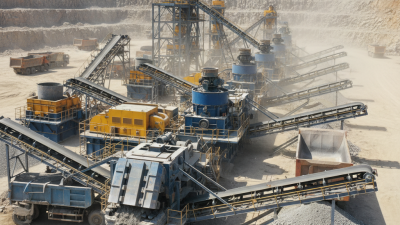
Choosing the right crusher for iron ore is a practical decision with long-term consequences. An Iron Ore Crushser must handle abrasive feed, variable moisture, and demanding production targets. The best choice depends on ore hardness, lump size, required product gradation, and plant layout. A machine that looks powerful may still perform poorly with sticky or highly competent ore. Field experience shows that feed preparation often matters as much as crusher size. Inspect blasting results, stockpile conditions, and conveyor capacity before comparing models. Small details matter. A blocked chute can stop an otherwise efficient circuit.
This guide explains how jaw, gyratory, cone, and impact crushers fit different iron ore applications. It also considers reduction ratio, throughput, liner wear, energy use, maintenance access, and total ownership cost. Reliable selection requires test data, not only catalog figures. Representative samples should be tested under realistic moisture and feed-size conditions. Manufacturer references, verified wear rates, and responsive service support can reveal more than a headline capacity number. Safety remains essential, including guarding, isolation procedures, dust control, and noise management. No selection is perfect. Early assumptions may prove wrong after commissioning, so the design should allow inspection and adjustment. A careful evaluation balances present output with future expansion, local technical skills, and spare-parts availability. With this method, buyers can reduce avoidable downtime and choose equipment that performs consistently from primary crushing through final sizing.
How to Choose the Best Iron Ore Crusher?
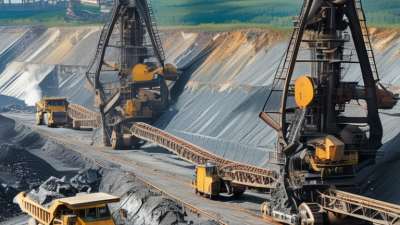
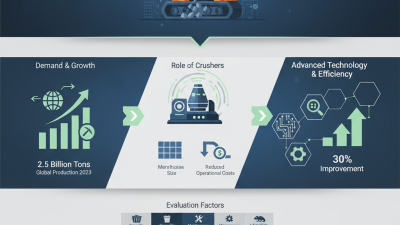
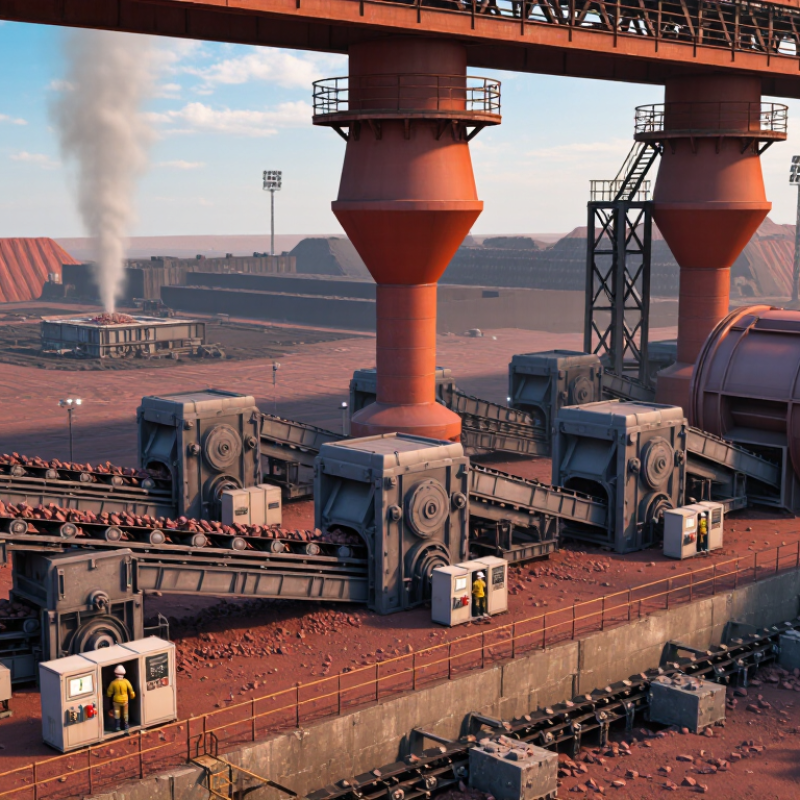
Crusher selection should begin with the ore, not the equipment catalogue. The USGS Mineral Commodity Summaries 2025 estimates global iron ore mine production at about 2.5 billion metric tons in 2024. That scale makes capacity, maintenance access, and energy use important. A primary gyratory crusher suits large run-of-mine feed and continuous high-volume operation. Jaw crushers offer simpler settings and easier control for smaller or variable feed. Start with the ore.
Secondary cone crushers reduce material more evenly and prepare it for screening. They work well with hard, abrasive magnetite, although liners gradually lose their profile. High-pressure grinding rolls can reduce energy demand in suitable circuits, but moisture and feed preparation strongly affect performance. Impact crushers may produce good shaping, yet excessive wear can make them unsuitable for highly abrasive ores. Moisture changes everything.
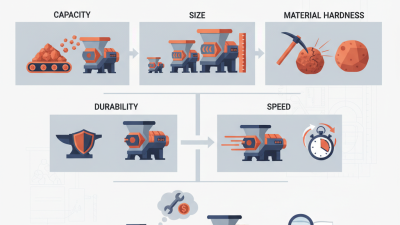
A reliable choice depends on measured feed size, compressive strength, abrasiveness, moisture, and target product size. Engineers should compare closed-side settings, reduction ratio, liner life, and actual power draw. The World Steel Association reported approximately 1.88 billion tonnes of crude steel production in 2024, keeping pressure on efficient iron ore processing. Still, a neat spreadsheet can mislead. Ore variability, tramp metal, and winter freezing may disrupt an otherwise sound design. Pilot testing and site data deserve more trust than a catalogue estimate. Wear remains unavoidable.
| Crusher Type | Typical Crushing Stage | Typical Maximum Feed Size | Typical Product Size | Approximate Reduction Ratio | Main Function | Key Advantages | Important Limitations | Best Selection Criteria |
|---|---|---|---|---|---|---|---|---|
| Jaw Crusher | Primary crushing | Up to approximately 1,200 mm, depending on equipment size | About 100–300 mm | Approximately 3:1 to 6:1 | Breaks large run-of-mine iron ore into a manageable size for secondary processing. | Simple structure, reliable operation, strong performance on hard and abrasive ore, and relatively easy maintenance. | Produces a less uniform product and may generate more slab-shaped particles than compression crushers used in later stages. | Choose when the feed contains large rocks and the plant needs a robust primary crusher. |
| Gyratory Crusher | Primary crushing | Often above 1,000 mm in large-scale installations | About 100–300 mm | Approximately 4:1 to 7:1 | Provides continuous high-capacity crushing of large quantities of iron ore. | High throughput, continuous crushing action, and good suitability for large mining operations. | Higher capital cost, larger installation footprint, and more complex maintenance than many jaw crushers. | Choose for very high production rates and a consistent supply of large-size ore. |
| Cone Crusher | Secondary or tertiary crushing | Typically up to approximately 300 mm, depending on the model and chamber | About 10–75 mm | Approximately 3:1 to 6:1 per stage | Further reduces crushed iron ore and produces a more controlled, cubical product. | Good product shape, high crushing efficiency, adjustable discharge setting, and strong wear resistance when properly configured. | Requires controlled feed, suitable chamber selection, and regular attention to wear parts and lubrication. | Choose when secondary or tertiary crushing requires consistent sizing and high-quality particle shape. |
| High-Pressure Grinding Rolls (HPGR) | Secondary, tertiary, or fine crushing | Commonly up to approximately 60–100 mm, depending on the circuit design | About 1–10 mm before milling, depending on the application | Approximately 3:1 to 5:1 per pass | Uses inter-particle compression to produce fine particles and micro-cracks that can improve downstream grinding efficiency. | Lower energy consumption than some conventional fine-crushing routes, high throughput, and potential improvement in mineral liberation. | Performance can be affected by moisture, feed-size distribution, tramp metal, and roll-surface wear. | Choose when energy efficiency and preparation for fine grinding or beneficiation are major priorities. |
| Impact Crusher | Secondary or tertiary crushing | Typically up to approximately 300 mm | About 10–50 mm | Approximately 10:1 to 20:1 | Uses impact energy to produce a relatively well-shaped and well-graded product. | High reduction ratio, good particle shape, and effective processing of less abrasive or moderately abrasive ore. | Blow bars and other wear parts can wear quickly when processing highly abrasive iron ore. | Choose only when ore abrasiveness is moderate and particle shape is more important than maximum wear resistance. |
| Hammer Crusher | Secondary or fine crushing | Usually up to approximately 200–300 mm | About 5–25 mm | Approximately 10:1 to 20:1 | Uses rapidly moving hammers to crush softer or less abrasive iron-bearing material. | Compact design, high reduction ratio, and the ability to produce a relatively fine product in a single stage. | High wear rate and reduced suitability for very hard, highly abrasive, or wet and sticky iron ore. | Choose for softer iron ore or controlled applications where a compact fine-crushing solution is needed. |
| Roll Crusher | Secondary or tertiary crushing | Commonly up to approximately 100–150 mm | About 5–50 mm | Approximately 3:1 to 4:1 | Compresses ore between rotating rolls to create a controlled product with limited over-crushing. | Predictable product sizing, relatively low over-crushing, and useful performance on friable or moderately hard material. | Lower reduction ratio than impact crushers and possible plugging when the feed is excessively wet or sticky. | Choose when controlled sizing and reduced fines generation are important. |
| Vertical Shaft Impact Crusher | Tertiary or shaping stage | Usually up to approximately 60 mm | Fine aggregate-sized product, commonly below 10–20 mm | Approximately 4:1 to 8:1 | Refines particle shape and improves cubicity through rock-on-rock or rock-on-metal impact. | Excellent particle shape, useful for final shaping, and effective in producing a more uniform fine product. | Generally unsuitable as the main crusher for very large feed and may experience high wear with abrasive ore. | Choose for final shaping or specialized fine-product requirements after primary and secondary crushing. |